7 Fascinating Facts About SpaceX’s Upcoming Mars Mission
SpaceX has consistently captured the imagination of space enthusiasts and dreamers alike. With every launch, Elon Musk’s vision of interplanetary travel inches closer to reality. As we stand at the dawn of a new era in space exploration, it’s time to turn our gaze toward the Red Planet. In 2026, SpaceX is gearing up for one of its most ambitious undertakings yet: sending humans to Mars. Here are seven fascinating facts about this upcoming mission that promises to redefine our understanding of space travel.
1. The Starship Revolution
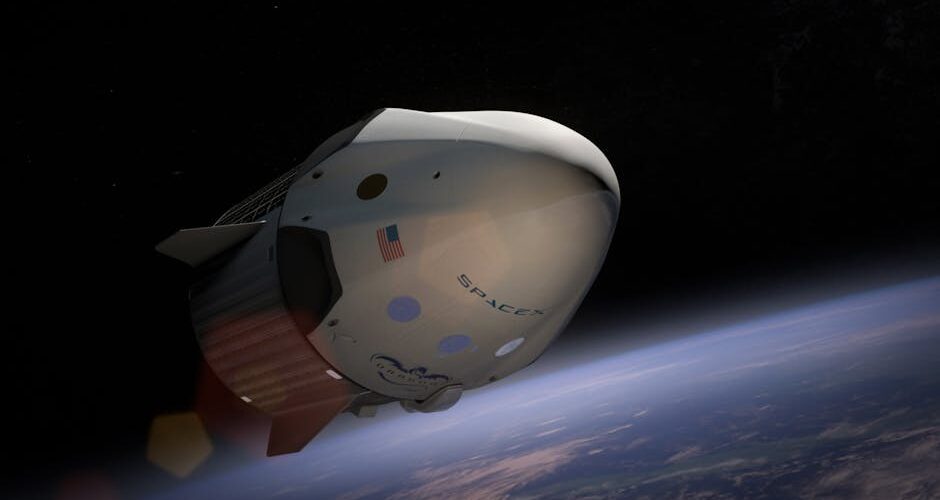
At the heart of SpaceX’s Mars mission is the Starship, a fully reusable spacecraft designed to carry up to 100 passengers to the Red Planet. The Starship stands tall at 120 meters when paired with its booster, Super Heavy, making it the largest spacecraft ever constructed. It is powered by Raptor engines that burn supercooled liquid methane and liquid oxygen, ensuring efficient propulsion. What sets the Starship apart is its ability to refuel in space, a feature that significantly reduces costs and makes deep-space missions more feasible.
2. The Mars Base: An Oasis in the Desert
The ultimate goal of this mission is to establish a self-sustaining colony on Mars, often referred to as Mars Base Alpha. The plan is to initially build a small settlement before expanding it into a thriving city. This base will be equipped with essential facilities, such as habitats, greenhouses, and research labs. Through innovative technologies like 3D printing, structures can be built using Mars’ own resources. The concept of in-situ resource utilization (ISRU) is central to this mission, allowing astronauts to “live off the land.”
3. The Role of AI and Robotics
Artificial intelligence and robotics will play crucial roles in the mission. Autonomous robots are slated to precede human arrivals, tasked with constructing essential infrastructure such as landing pads and power stations. These robots will utilize AI to navigate the harsh Martian terrain and complete tasks with minimal human intervention. The deployment of AI-driven systems will also ensure communication and data management, making the mission more efficient and reducing the need for constant human oversight.
4. The Journey: A Six-Month Voyage
The voyage to Mars is expected to take around six months, depending on the alignment of Earth and Mars. During this time, astronauts will experience microgravity, requiring rigorous physical and mental preparation. SpaceX has developed comprehensive training programs to prepare the crew for the intense journey ahead. This preparation includes simulations of living in confined spaces, conducting scientific experiments, and maintaining physical fitness to counteract the effects of prolonged weightlessness.
5. Environmental Challenges and Solutions
Mars presents numerous environmental challenges, from its thin atmosphere to its frigid temperatures and radiation levels. SpaceX plans to tackle these challenges head-on. Innovative life support systems will ensure the safety and well-being of the crew, including radiation shielding and pressurized habitats. Engineers are also designing advanced suits that will protect astronauts during their extravehicular activities. By leveraging cutting-edge technology, SpaceX aims to create a safe and habitable environment for humans on Mars.
6. The Global Collaboration Effort
While SpaceX spearheads this mission, it is not a solo endeavor. The mission involves collaboration with international space agencies, research institutions, and private partners. This global effort aims to pool resources, knowledge, and expertise to achieve the common goal of Martian exploration. From scientific payloads contributed by various countries to joint research initiatives, the mission exemplifies the spirit of international cooperation in space exploration.
7. The Impact on Earth
The Mars mission isn’t just about exploring new worlds; it has profound implications for life on Earth. The technological advancements developed for this mission, from sustainable energy solutions to advancements in AI, have potential applications across various industries. Moreover, the mission serves as a powerful inspiration, encouraging future generations to pursue careers in science, technology, engineering, and mathematics (STEM). It’s a testament to human ingenuity and the relentless pursuit of knowledge.
SpaceX’s Mars mission is more than a voyage across space; it’s a bold step towards ensuring the survival of humanity as a multi-planetary species. As we look forward to this momentous event, one can only marvel at the possibilities that lie ahead. With ambition, collaboration, and innovation at its core, this mission could very well lay the foundation for a new chapter in human history.
The practical takeaway? Stay curious and keep an eye on the stars. The universe is vast, and with endeavors like these, the future is bright.