Understanding Quantum Computing
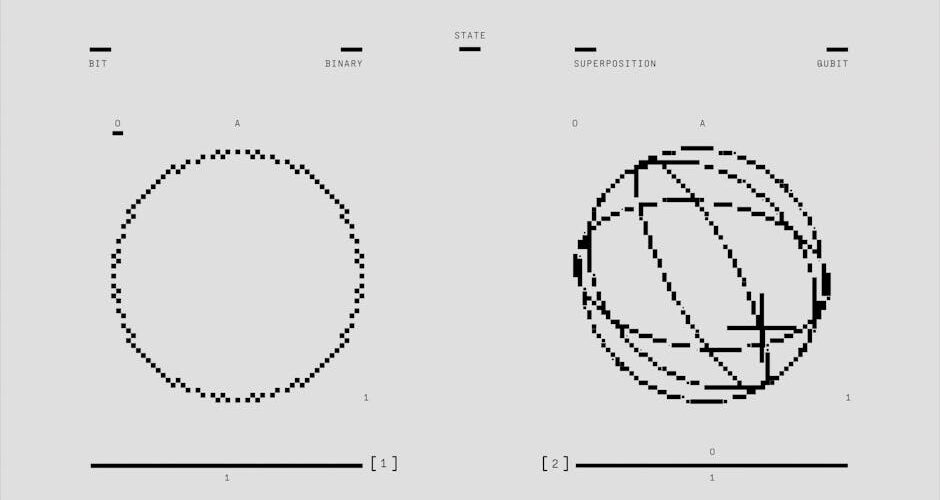
Quantum computing is no longer a theoretical concept confined to academic papers. In 2026, it has rapidly evolved into a practical tool, transforming various fields, including space exploration. At its core, quantum computing leverages the principles of quantum mechanics to perform calculations at unprecedented speeds. While classical computers use bits as the smallest unit of data, quantum computers employ qubits, which can exist in multiple states simultaneously. This unique characteristic allows them to solve complex problems much faster than their classical counterparts.
Take, for example, the problem of factorizing large numbers—a task that classical computers struggle with. Quantum computers can handle such challenges with relative ease, opening up new possibilities for cryptography and beyond. But how does this relate to space exploration?
Enhancing Navigation and Trajectory Calculations
Space missions, whether manned or unmanned, require precise navigation and trajectory calculations. Even the slightest error can lead to catastrophic results. Quantum computing offers a powerful solution by significantly enhancing the accuracy and speed of these calculations.
NASA, ESA, and other space agencies are increasingly using quantum algorithms to simulate and predict spacecraft paths. This technology is not just theoretical; it’s being actively tested and applied to ongoing missions. For instance, the 2025 Mars mission used quantum-enhanced calculations to adjust its trajectory, ensuring a smoother landing.
Accelerating Astrophysical Simulations
Simulating the universe is no small feat. From black holes to galaxy formations, these complex phenomena require immense computational power. Traditional supercomputers, albeit powerful, can take weeks to simulate a single event. Quantum computers, with their ability to handle complex variables simultaneously, are dramatically reducing these timelines.
In 2026, astrophysicists at the Large Hadron Collider and the James Webb Space Telescope are utilizing quantum simulations to explore the mysteries of dark matter and dark energy. These insights not only enhance our understanding of the cosmos but also guide future space missions.
Improving Communication Systems
Long-distance communication is a critical challenge in space exploration. The further a spacecraft ventures, the longer it takes for data to travel between Earth and the craft. Quantum computing, paired with quantum communication technologies, promises to revolutionize this aspect by enabling faster and more secure data transmission.
Projects like the Chinese Micius satellite have already demonstrated the potential of quantum communication in reducing latency and enhancing security through quantum cryptography. By 2026, these technologies are being integrated into deep-space missions, ensuring that communication remains reliable even at the solar system’s fringes.
Quantum Computing and the Search for Extraterrestrial Life
Analyzing the vast amounts of data collected from space telescopes and probes is a daunting task. Quantum computing offers a way to sift through this data more efficiently, identifying patterns and anomalies that might indicate the presence of extraterrestrial life.
The SETI Institute has partnered with quantum computing firms to refine their search algorithms. By leveraging quantum computing, scientists are hopeful that they can analyze signals from distant star systems with greater clarity and speed, bringing us closer to answering the age-old question: Are we alone in the universe?
Practical Takeaway: Embracing the Quantum Era
As we stand on the brink of a new era in space exploration, the role of quantum computing cannot be overstated. It’s shaping every aspect of how we explore and understand the universe. For those interested in space science, staying informed about advancements in quantum technologies can provide valuable insights into the future of exploration. Whether you’re a student, researcher, or enthusiast, embracing this quantum revolution can unlock new opportunities and inspire groundbreaking discoveries.