The Hidden Heroes of Space Exploration: How Earth-Based Technologies Propel Us Forward in 2026
Explore how ground-based technologies like AI, VR, and 3D printing are the unsung heroes driving space exploration in 2026.
History and space exploration and science
Explore how ground-based technologies like AI, VR, and 3D printing are the unsung heroes driving space exploration in 2026.

Astrobiology is experiencing a renaissance in 2026, fueled by new discoveries on Mars, Europa, and exoplanets, alongside technological innovations. Scientists are closer than ever to uncovering life beyond Earth.
In 2026, celestial cartography is undergoing a renaissance, driven by AI and advanced telescopes, to map the stars, dark matter, and exoplanets with unprecedented detail.
In 2026, scientists are charting the sun’s mysterious currents with unprecedented precision, impacting space weather forecasting and solar energy harnessing.
The field of exoplanet discovery is reshaping our understanding of the universe in 2026, with groundbreaking technological advances and significant cultural impacts.
In 2026, space exploration is being redefined by advancements in propulsion, commercialization, and AI, transforming how we explore and utilize our universe.
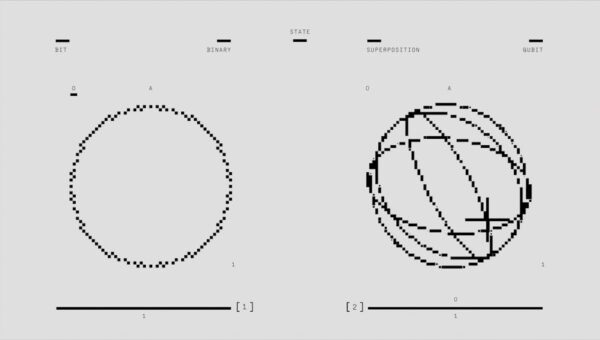
Quantum computing is transforming space exploration by enhancing navigation, accelerating astrophysical simulations, improving communication, and aiding the search for extraterrestrial life.
Engaging kids in the mysteries of the universe through storytelling, hands-on activities, and technology fosters curiosity and a love for learning.
Long-duration space missions present significant challenges for astronauts, from psychological isolation to physical health issues exacerbated by microgravity and radiation.
Interstellar travel, a concept long romanticized in science fiction, faces significant scientific and technological challenges. However, advancements in propulsion technologies, theoretical physics, and AI bring us closer to the stars.