Introduction: Technology on the Ground, Impact in the Stars
Space exploration often captures our imagination with images of rockets launching and astronauts floating in zero gravity. However, much of the heavy lifting in this field happens right here on Earth. As we navigate through 2026, the hidden heroes behind our interstellar ambitions are the ground-based technologies that continue to evolve and innovate, quietly driving our journeys to the stars.
The Backbone of Space Missions: Ground Stations
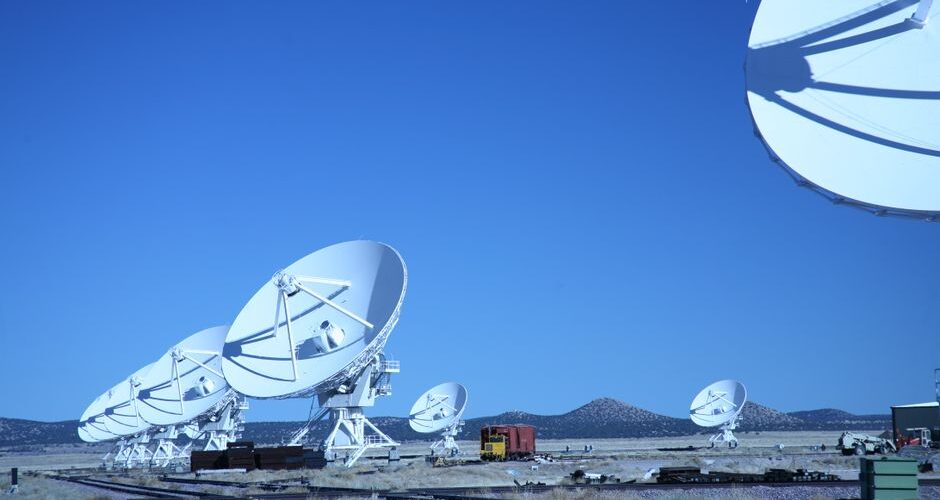
Without ground stations, most space missions would come to a halt. These terrestrial hubs are responsible for everything from tracking satellites to communicating with spacecraft on distant worlds. In 2026, we are witnessing a significant upgrade in these facilities. For instance, the New Norcia ground station in Australia has recently incorporated quantum encryption technology to secure data transmission to and from space, safeguarding it against cyber threats. With hundreds of satellites launched annually, the role of ground stations has never been more critical.
Artificial Intelligence: The New Mission Control
Artificial Intelligence (AI) is rapidly becoming the brain behind mission control centers. In 2026, AI systems are not just assisting but actively managing routine operations of spacecraft. At NASA’s Jet Propulsion Laboratory, AI is used to monitor and diagnose spacecraft health autonomously. These systems can predict anomalies before they occur, allowing engineers to focus on more complex problems and innovations. This shift reduces human error, increases efficiency, and ensures that missions are completed with higher success rates.
Virtual Reality: Training the Next Generation of Astronauts
One of the most innovative uses of technology for space exploration training is Virtual Reality (VR). In 2026, VR simulators have become a staple in astronaut training programs. These systems create immersive environments that reproduce the experience of being in space, from the sensation of zero gravity to the intricate controls of a spacecraft. The European Space Agency has recently launched a VR module that simulates the Mars surface, giving astronauts a head start on future Martian missions.
3D Printing: Revolutionizing Spacecraft Manufacturing
The potential of 3D printing in space exploration is enormous. In 2026, the technology is not just limited to manufacturing spare parts in orbit; it is also revolutionizing how spacecraft and components are built on Earth. Companies like Made In Space are using 3D printing to create lightweight, strong materials that can withstand the harsh conditions of space. This method not only reduces the cost of production but also allows for customizable components tailored for specific missions.
Earth-Based Space Simulations: Testing the Limits
Simulating space conditions on Earth remains a cornerstone of mission preparation. Facilities like the Neutral Buoyancy Laboratory in Houston, Texas, offer realistic environments to test equipment and train astronauts. In 2026, these simulations incorporate advanced robotics to mimic the challenges of extraterrestrial landscapes. Simulations in underwater environments, where the buoyancy can mirror that of a low-gravity field, are particularly beneficial for training astronauts on tasks they will perform on the Moon or Mars.
Takeaway: The Unsung Heroes Behind the Stars
As we look towards the future of space exploration, it’s crucial to acknowledge the Earth-based technologies that play a vital role in our journey. These innovations not only support current missions but also lay the groundwork for the next generation of exploration. From AI and VR to ground stations and 3D printing, these technologies ensure that when we reach for the stars, we do so with precision and assurance.