The Legacy of the Voyager Probes: Still Traveling in 2026
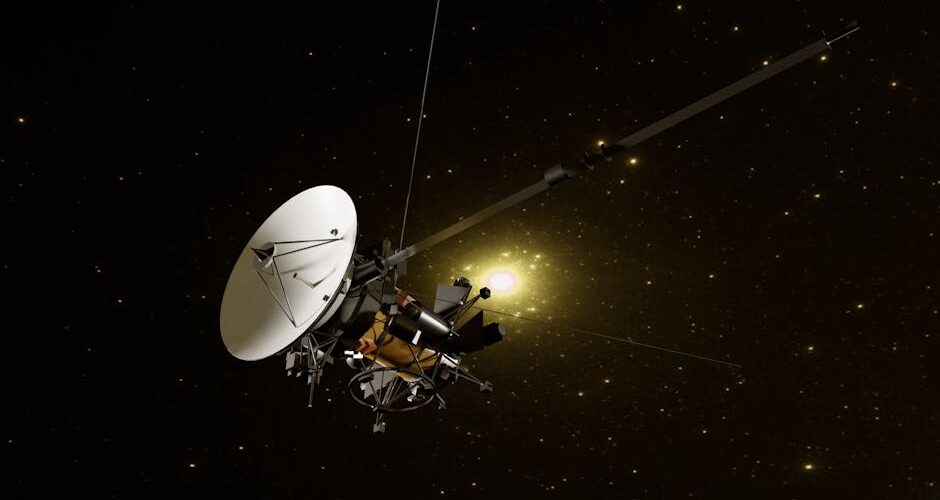
The year is 2026, and the Voyager probes, launched nearly five decades ago, continue their odyssey through space. These remarkable spacecraft have surpassed their original mission objectives and ventured beyond our solar system, providing humanity with invaluable scientific data and inspiring generations of explorers.
The Beginnings of a Journey
Back in 1977, the Voyager 1 and Voyager 2 spacecraft embarked on a journey that was unprecedented at the time. Designed to take advantage of a rare alignment of the outer planets, these probes were tasked with studying Jupiter and Saturn and their moons in detail. Voyager 2 was also directed to explore Uranus and Neptune, making it the only spacecraft to have visited these distant worlds. The probes were expected to function for about five years, but their longevity has far exceeded expectations.
Milestones and Discoveries
The Voyagers have achieved numerous milestones that have enriched our understanding of the outer solar system. Voyager 1 provided the first detailed images of Jupiter’s turbulent atmosphere and discovered its Great Red Spot. It also captured the active volcanoes of Io, forever changing our view of the moon’s geologic activity.
- Saturn’s Rings: Voyager 2’s flyby of Saturn revealed complex structures within its rings, including ringlets and gaps, surprising scientists with their dynamic nature.
- Uranus and Neptune: Voyager 2’s encounters with Uranus and Neptune unveiled the blue-green hues of these ice giants. The spacecraft discovered 11 new moons around Uranus and 6 around Neptune, along with Neptune’s Great Dark Spot.
These discoveries have provided a foundation for future missions and theoretical research, enhancing our comprehension of planetary systems.
Crossing into Interstellar Space
In 2012, Voyager 1 became the first human-made object to enter interstellar space, a milestone that Voyager 2 achieved in 2018. This transition marked the beginning of a new era in space exploration as both probes transmitted data from beyond the heliosphere, the protective bubble of particles and magnetic fields generated by our sun. The data gathered from this region has offered unprecedented insights into the nature of the interstellar medium and the forces that shape our solar system’s boundary.
The Golden Record: A Message to the Cosmos
The Voyager probes carry with them the Golden Record, a 12-inch gold-plated copper disc that encapsulates the sounds and images of life on Earth. Curated by a team led by Carl Sagan, this interstellar message includes greetings in 55 languages, a selection of world music, and 116 images depicting the diversity of life and culture on our planet. The Golden Record serves as a time capsule, offering any potential extraterrestrial civilization a glimpse of human culture and our place in the cosmos.
The Challenges of Communication
As the Voyager probes venture further away from Earth, maintaining communication becomes increasingly challenging. Currently, signals from the probes take over 22 hours to reach Earth, and the power levels of their instruments are gradually declining. Scientists at NASA’s Jet Propulsion Laboratory continuously work to optimize power usage, ensuring that key instruments remain operational for as long as possible. This delicate balancing act is a testament to human ingenuity and perseverance in the face of technological and logistical obstacles.
The Enduring Legacy
The Voyager missions have left an indelible mark on the field of space exploration. Their success has paved the way for future deep-space missions, including the upcoming interstellar probe planned for the 2030s. The comprehensive data collected by the Voyager probes continue to serve as a vital scientific resource, inspiring researchers to push the boundaries of what we know about our universe.
Beyond scientific achievements, the Voyagers have sparked the imagination of countless individuals, highlighting the relentless human desire to explore the unknown. They have also fostered international collaboration and an appreciation for the wonders of our cosmic neighborhood.
The Voyager probes, steadfastly traveling through the vastness of space, remind us of our own small but significant presence in the universe. As we look toward the future of space exploration, the legacy of the Voyagers endures, a testament to human curiosity and the timeless quest for knowledge.
For those inspired by the Voyager mission, consider how this enduring journey reflects the importance of setting bold goals and continuously striving to explore new frontiers, both in space and in our lives.