The Legacy of the Voyager Probes: Still Traveling in 2026
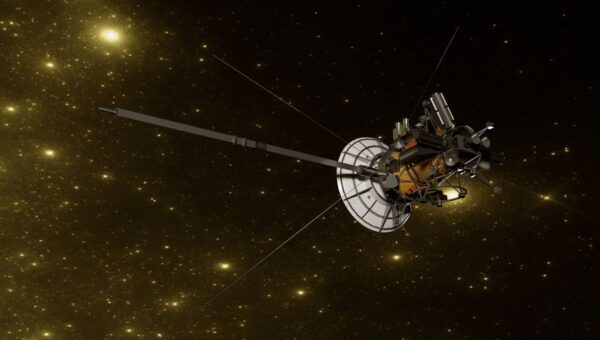
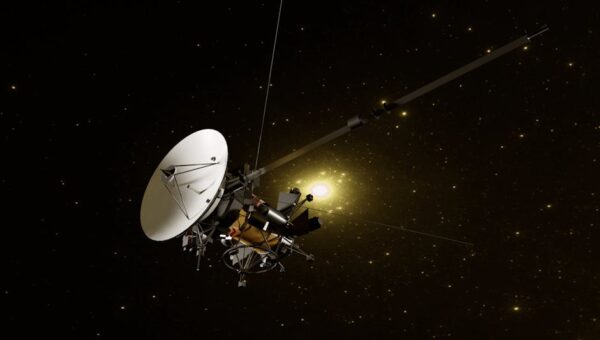
The Voyager probes, launched in 1977, continue to explore beyond our solar system in 2026, surpassing all expectations and leaving a lasting legacy in space exploration.
History and space exploration and science
The Voyager probes, launched in 1977, continue to explore beyond our solar system in 2026, surpassing all expectations and leaving a lasting legacy in space exploration.
Dark matter, comprising about 27% of the universe, plays a critical role in our understanding of cosmic formation and challenges existing physics, driving the search for new theories and technological advancements.
2027 promises to be a pivotal year in the search for extraterrestrial life, with new missions, technology, and data analysis methods offering exciting possibilities.
In 2026, satellites are more vital than ever, revolutionizing communication, enhancing climate monitoring, and advancing scientific research. These unsung heroes in space are integral to our daily lives.
The Hubble Space Telescope has been a pivotal tool in astronomical research, revealing the universe’s secrets since its launch in 1990. Its story is one of scientific triumph and human ingenuity.
Astronomers are using cutting-edge technology, AI, and historical data to improve predictions of solar flares, safeguarding Earth from their disruptive effects.
Revolutionary technologies from reusable rockets to suborbital tourism are transforming space travel by 2026, making it more accessible and efficient.
Watching a meteor shower can be magical, but avoiding these seven common mistakes ensures a dazzling night under the stars.
The Artemis Program is redefining space exploration by focusing on sustainability, inclusivity, and international collaboration, setting the stage for a future beyond Earth.
2027 is set to be a transformative year in space exploration, with major lunar missions, technological innovations, and international collaborations marking a new era in our journey to the stars.