Exploring the Unknown: The Future of Black Hole Research
As we stand on the doorstep of 2026, the universe continues to surprise us with its enigmatic wonders. Among these cosmic mysteries, black holes remain one of the most captivating and perplexing phenomena. These celestial titans challenge our understanding of physics, offering both questions and answers that fuel scientific inquiry. With advances in technology and a growing community of researchers, the next few years promise to be transformative in black hole research.
The Technology Revolution
Advancements in technology have always been a catalyst for progress in space exploration, and black hole research is no exception. The Event Horizon Telescope (EHT) collaboration, which famously captured the first-ever image of a black hole in 2019, has sparked a technological revolution. By 2026, the EHT network has grown, now encompassing over 12 observatories worldwide, including new sites in Africa and South America. This expansion has significantly improved the resolution and sensitivity, allowing scientists to probe black holes with unprecedented detail.
Moreover, the advent of space-based observatories such as the James Webb Space Telescope (JWST) and the Laser Interferometer Space Antenna (LISA) has opened new avenues for black hole research. JWST, launched in late 2021, continues to deliver stunning infrared images and data, unraveling the secrets of supermassive black holes residing in the hearts of distant galaxies. Meanwhile, LISA, slated for launch in the early 2030s, promises to detect gravitational waves from merging black holes across the universe, offering insights into their formation and evolution.
Decoding Black Hole Information Paradox
One of the most tantalizing puzzles in theoretical physics is the black hole information paradox. This conundrum questions whether information that falls into a black hole is lost forever, challenging the fundamental principles of quantum mechanics. In the last few years, significant strides have been made towards resolving this paradox. Researchers at the Institute for Advanced Study in Princeton have developed new mathematical models suggesting that black holes may indeed store information in a highly scrambled form on their surfaces, akin to a cosmic hologram.
These theoretical advancements are being tested with the help of improved simulations and collaborations between international research teams. The interplay between quantum mechanics and general relativity is at the heart of this endeavor, and while a definitive answer remains elusive, the ongoing research holds the promise of a breakthrough that could redefine our understanding of the universe.
Black Holes and the Origin of the Universe
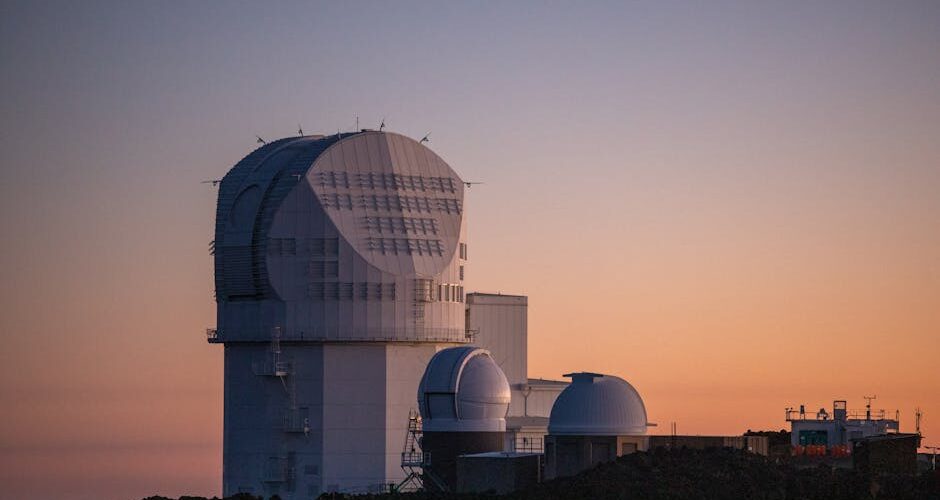
Black holes are not just destroyers of matter; they are also windows into the universe’s past. Recent discoveries suggest that supermassive black holes could have played a crucial role in the formation and evolution of galaxies. Observations from the Subaru Telescope in Hawaii have revealed quasars powered by supermassive black holes that date back to just a few hundred million years after the Big Bang. These findings challenge existing models of galaxy formation, indicating that black holes may have been pivotal in shaping the early universe.
Furthermore, the study of primordial black holes—hypothetical remnants from the Big Bang—has gained momentum. If they exist, these ancient objects could provide insights into the conditions of the early universe and potentially even the elusive nature of dark matter. As we refine our detection methods, the hunt for primordial black holes continues to be a focal point of research.
Human Endeavors and Cosmic Mysteries
Behind every discovery and every piece of data lies the tireless work of dedicated scientists, engineers, and researchers. Institutions like the Max Planck Institute for Astrophysics in Germany and the Harvard-Smithsonian Center for Astrophysics in the United States are at the forefront of black hole research, fostering collaborations that span the globe. These efforts are supported by international organizations such as the European Space Agency (ESA) and NASA, which provide funding and technological resources.
The community-driven approach to black hole research has not only accelerated scientific progress but also inspired a new generation of astrophysicists. Educational programs and public outreach initiatives have demystified black holes for students and enthusiasts alike, ensuring that the quest for knowledge continues well into the future.
Practical Takeaway: Embracing the Unknown
As we venture further into the mysteries of black holes, one thing becomes clear: the unknown is not something to be feared, but embraced. The future of black hole research promises to challenge our understanding of the cosmos and our place within it. By embracing technological advancements, fostering international collaboration, and nurturing the curiosity of future generations, we can look forward to uncovering the secrets that the universe holds. The journey is just as important as the destination, and with each discovery, we take another step closer to understanding the complex tapestry of the cosmos.