Understanding Solar Flares
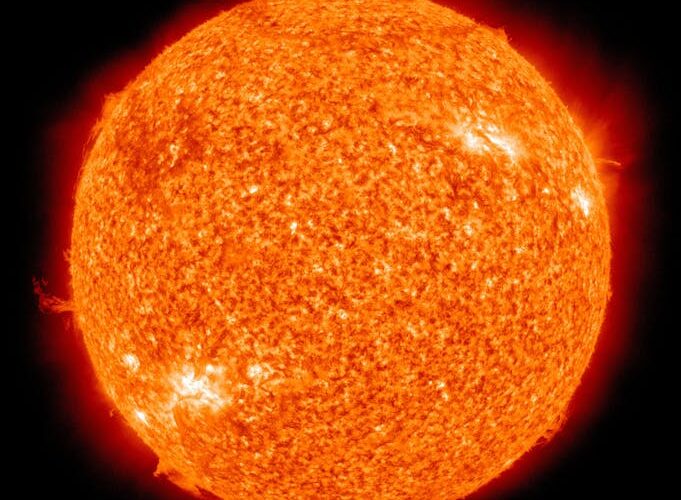
Solar flares are immense bursts of radiation emanating from the sun, often disrupting communications on Earth and endangering astronauts. These phenomena occur when magnetic energy built up in the solar atmosphere is released, propelling light, energy, and particles into space. For centuries, humans have gazed up at the fiery orb, seeking not just to understand the sun’s surface but also to predict its next move.
The Science Behind Solar Flares
The sun operates on an approximately 11-year solar cycle, oscillating between periods of high and low activity. During peak activity, known as the solar maximum, flares become more frequent and intense. Researchers today utilize sophisticated technologies to anticipate these events. At the heart of this effort is the Solar Dynamics Observatory (SDO), launched by NASA in 2010. This spacecraft constantly monitors the sun, using instruments like the Helioseismic and Magnetic Imager (HMI) to map the sun’s magnetic field.
Key Predictive Techniques
Predicting solar flares involves a combination of techniques:
- Data from Solar Observatories: Instruments aboard the SDO capture high-resolution images of the sun’s surface every 12 seconds, providing an unprecedented view of sunspots and solar flares.
- Magnetograms: These are maps of the sun’s magnetic field, crucial for understanding where energy is likely to be released. Strong, complex magnetic fields are more likely to produce significant flares.
- Computer Models: Using historical data and current observations, astronomers create models that simulate the sun’s magnetic activity. Advanced algorithms help forecast when and where the next flare might erupt.
Case Study: The 2023 Halloween Flares
Not far back in our rearview mirror are the Halloween Flares of 2023, a series of powerful eruptions that reminded the world of the sun’s might. Scientists had been tracking a particularly active region on the sun, referred to as AR3112. Magnetograms showed extremely intricate magnetic fields in this area. Predictions pointed towards heightened activity, and as expected, the sun unleashed several flares, disrupting satellite communications and power grids on Earth.
The Role of AI in Prediction
Artificial Intelligence has revolutionized how astronomers predict solar flares. AI systems analyze vast datasets faster and more accurately than humans. Neural networks trained on decades of solar data can identify patterns and make predictions about future solar activity. In a 2025 study published in the Journal of Space Weather, researchers utilized AI to successfully predict a significant solar flare 72 hours in advance, marking a significant leap in predictive accuracy.
Practical Implications for Earth
As our reliance on technology grows, understanding and predicting solar flares becomes critical. These solar phenomena can disable GPS systems, disrupt radio communications, and even cause widespread electrical outages. Airlines adjust flight paths to avoid high-altitude radiation, and power companies develop strategies to protect grids from geomagnetic storms. By honing predictive techniques, we can better prepare and protect our technological infrastructure.
The sun, with its radiant energy, remains a source of both life and challenge. As astronomers refine their methods of prediction, society gains a critical tool to safeguard against the sun’s more disruptive moods. While predicting the exact moment of the next big solar flare remains an art and a science, the tools at our disposal today bring us closer than ever to anticipating these celestial events.
So, as we look to the skies, we carry with us the knowledge and technology developed from centuries of study, ever ready to meet the challenges of the cosmos.