The Rise of Exoplanet Discovery
In 2026, the field of exoplanet discovery is flourishing like never before. Thanks to the continued advancements in space telescopes and observational technology, the catalog of known exoplanets has surpassed 5,000. This is not just a number; it’s a testament to the ingenuity and relentless pursuit of knowledge by scientists around the globe. The James Webb Space Telescope, with its unrivaled infrared capabilities, has been pivotal in this pursuit. Its observations have unveiled new worlds in the habitable zones of distant stars, sparking excitement and curiosity about the potential for life beyond Earth.
Technological Marvels Driving Exploration
The exponential growth in exoplanet discoveries owes much to technological advancements. 2026 has seen the implementation of next-generation spectrometers and adaptive optics that allow astronomers to study the atmospheres of these distant worlds. The European Extremely Large Telescope (E-ELT), currently the largest optical telescope on Earth, plays a crucial role by capturing images of exoplanets with unprecedented clarity. These technological marvels are not only helping us identify new planets but are also enabling us to analyze their compositions, climates, and potential for hosting life.
Exoplanets and the Search for Life
The quest to find extraterrestrial life has always been at the heart of space exploration, and exoplanets offer the most promising avenue. 2026 has marked significant progress in this quest, with astronomers focusing on Earth-like planets located in the habitable zones of their stars. Instruments like the Transiting Exoplanet Survey Satellite (TESS) have been vital in this search, identifying planets that could have liquid water—a key ingredient for life as we know it. The discovery of potentially habitable exoplanets has reignited discussions about the possibility of finding microbial life or even complex organisms.
Understanding Our Solar System Through Exoplanets
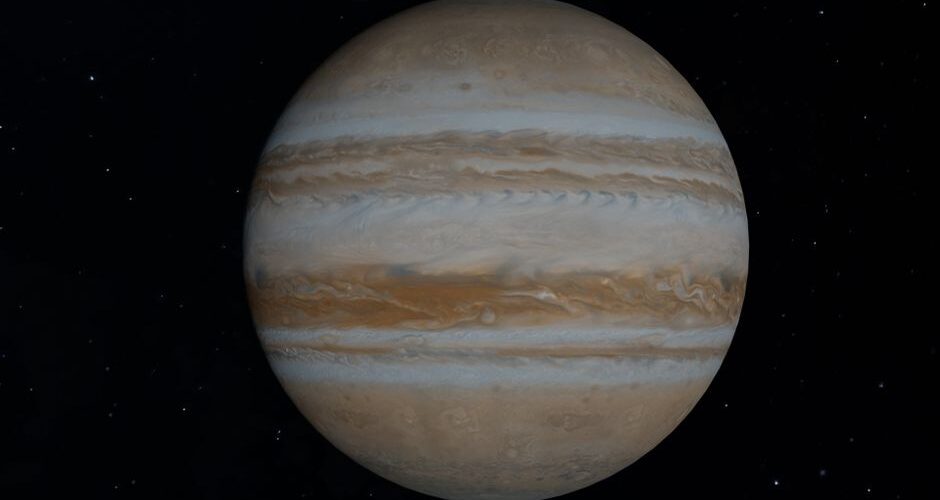
Exoplanet research is not just about finding new worlds; it’s about understanding our own. By comparing and contrasting these distant planets with those in our solar system, scientists gain insights into planetary formation and evolution processes. For instance, studying hot Jupiters—gas giants that orbit very close to their stars—helps us understand the diverse range of planetary systems that exist and how unique or common our own solar system might be in the cosmos. This comparative planetology is reshaping our understanding of planetary science and the history of our solar neighborhood.
The Cultural Impact of Exoplanet Discoveries
Beyond the scientific implications, exoplanet discoveries are deeply impacting culture and society. The idea that there are innumerable worlds out there changes our perspective on humanity’s place in the universe. It challenges philosophical and theological concepts about life’s uniqueness and the nature of our existence. Popular media, from science fiction novels to documentaries, are increasingly incorporating these discoveries, sparking public imagination and interest. As we continue to learn more about these distant worlds, our cultural narratives and self-image as a species may evolve alongside these scientific advancements.
Practical Takeaway
The ongoing exploration of exoplanets is more than an academic pursuit; it’s a profound journey that invites us to rethink our place in the universe. By supporting scientific endeavors and staying informed about these discoveries, we become part of a global conversation that has the potential to redefine our understanding of life and the cosmos. As we continue to identify new exoplanets and learn about their environments, we are not just expanding scientific knowledge but also exploring the very essence of what it means to be human in a vast, interconnected universe.