Why Satellites Are More Important Than Ever in 2026
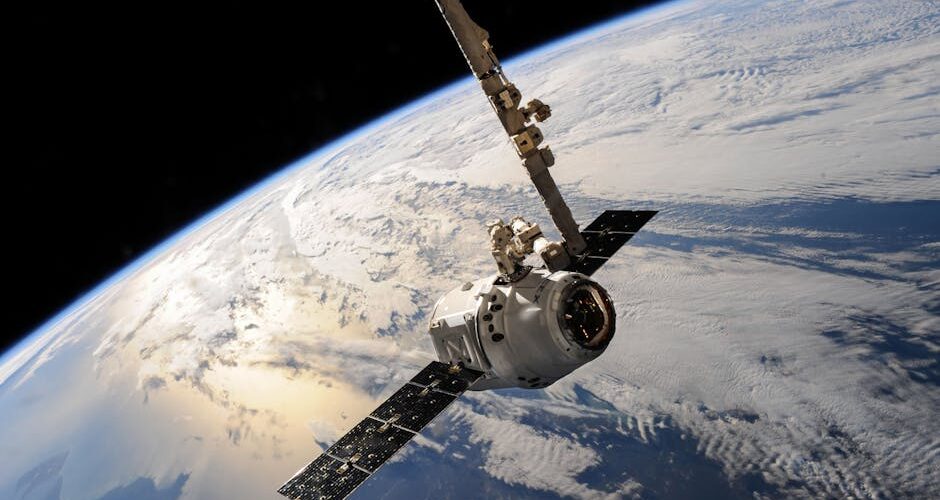
It’s 2026, and satellites have become the unsung heroes of modern society. As technology advances at breakneck speeds, these silent sentinels in space are more crucial than ever. From monitoring climate change to enhancing global communication, satellites play an irreplaceable role in our daily lives.
Revolutionizing Communication
In the past few years, the demand for instant, reliable communication has soared. With over 5 billion smartphone users worldwide, satellites have stepped in to bridge the connectivity gap. The launch of mega-constellations, like SpaceX’s Starlink and Amazon’s Project Kuiper, has brought high-speed internet to remote areas previously off the digital grid.
These advancements have not only enabled people in rural locations to access education and healthcare but have also facilitated emergency response during natural disasters. In 2025, when Hurricane Ivan hit the Caribbean, satellite communication was vital for coordinating relief efforts and providing real-time updates to affected communities.
Climate Monitoring and Environmental Protection
As climate change continues to threaten our planet, satellites have become indispensable tools in environmental monitoring. By 2026, over 600 Earth observation satellites are orbiting the planet, many dedicated to tracking changes in sea levels, forest cover, and ice cap melting.
Data from satellites like NASA’s Aqua and Terra has been crucial in understanding the rapid shifts in global weather patterns. In particular, the Sentinel-6 Michael Freilich satellite has provided high-precision sea-level measurements, helping scientists predict coastal flooding more accurately and assisting governments in preparing for rising tides.
Enhancing Agriculture
Agriculture is another sector that has benefited immensely from satellite technology. With the global population expected to reach 8.6 billion by 2030, food security is a pressing concern. Satellites equipped with multispectral and hyperspectral sensors allow farmers to monitor crop health, manage water resources, and optimize fertilizer use.
Programs like the European Space Agency’s Copernicus initiative have empowered farmers to increase yields while reducing environmental impact. In India, the use of satellite data has led to a 20% increase in crop productivity over the last decade, showcasing the potential of space technology in tackling global food challenges.
Advancing Scientific Research
For scientists, satellites are windows to the universe. They enable groundbreaking research in fields ranging from cosmology to geology. The James Webb Space Telescope, which launched in late 2021, continues to provide unprecedented views of distant galaxies and star-forming regions.
Closer to home, satellites like the Gravity Recovery and Climate Experiment Follow-On (GRACE-FO) have delivered critical insights into Earth’s gravitational field. This information is pivotal for understanding phenomena like groundwater depletion and glacial melting, furthering our comprehension of Earth’s complex systems.
National Security and Global Cooperation
Satellites have long been vital to national security. Their ability to provide real-time intelligence and surveillance allows nations to monitor potential threats. In 2026, international collaborations in space have grown, with countries recognizing the importance of shared satellite data for global peace and security.
The European Union’s Galileo and the Russian GLONASS systems are examples of how geopolitical rivals have worked together in space to improve navigation accuracy worldwide. These collaborations emphasize that, despite terrestrial disputes, space remains a realm where cooperation can trump competition.
The Practical Takeaway: Satellites as Pillars of Progress
Satellites have cemented their place as pillars of progress in 2026. They enhance our ability to communicate, understand our environment, improve agricultural output, and advance scientific knowledge. As we continue to rely on these celestial tools, it’s crucial for governments, private enterprises, and international organizations to invest in sustainable satellite technologies. This investment ensures that we not only maintain but also expand the benefits they provide, keeping pace with the evolving needs of our world.