How to Teach Kids About the Wonders of the Universe
The universe is a vast, enchanting mystery waiting to be unraveled by curious minds. Teaching kids about the cosmos not only ignites their imagination but also nurtures critical thinking and a sense of wonder. By blending storytelling, hands-on activities, and modern technology, we can make the universe accessible and engaging to the young explorers of 2026.
Embrace the Magic of Storytelling
Children are natural storytellers, and weaving the wonders of the universe into captivating narratives can spark their interest like nothing else. Imagine telling the story of Galileo Galilei as he peered through his telescope, discovering moons orbiting Jupiter for the first time. Transport kids back 400 years to the time when the Milky Way was revealed not through words, but an excited gasp.
Books like “Starry Messenger” by Peter Sís and “The Darkest Dark” by Chris Hadfield transform these cosmic tales into personal adventures. Encourage your child to invent stories about their own space explorations or create a fictional planet with its own unique ecosystems and civilizations.
Hands-On Activities that Reach for the Stars
There’s no replacement for the tangible thrill of hands-on discovery. Creating simple models of the solar system can instill a sense of scale and distance. Use brightly colored foam balls and string to represent planets orbiting the sun; it’s a project that both educates and decorates the classroom or living room.
Encourage kids to build their own rocket models. There are countless kits available, but even a homemade paper rocket powered by a straw can fascinate. Discuss the 2024 Artemis II mission to the Moon and let them imagine being part of future space journeys.
Explore the Night Sky Together
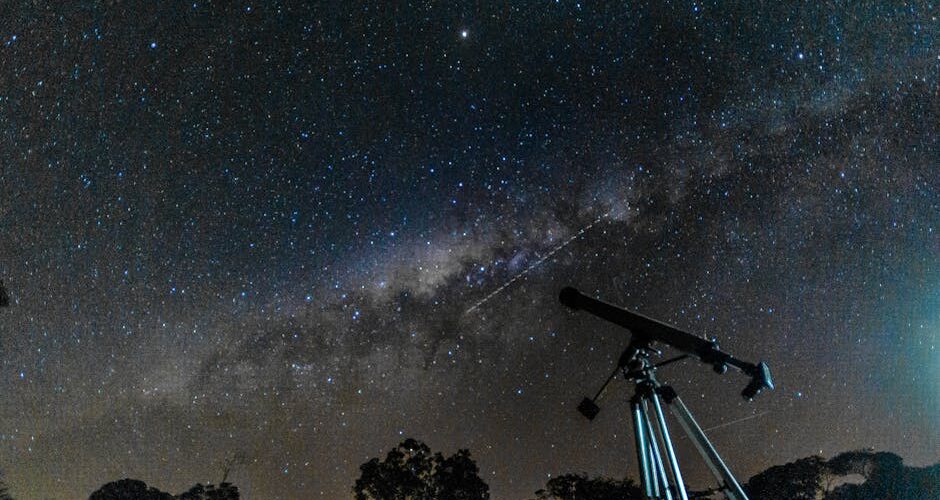
The night sky is a spectacular show waiting to be observed. Locate a spot away from the city’s glow, perhaps near the Mauna Kea Observatories if you’re fortunate enough to live in Hawaii, or even in your own backyard. Equip your young astronomer with a pair of binoculars or a small telescope and help them identify constellations and planets.
Standing outside on a clear night, help them pick out Orion’s Belt or the red glow of Mars. Apps like SkyView can turn stargazing into an interactive experience, where an overlay of constellations and planetary positions elevates simple observation into a magical journey.
Leverage Technology to Expand Horizons
In 2026, technology is a bridge to the stars. Virtual reality (VR) headsets can now transport kids to the surface of Mars or let them float around the International Space Station. These immersive experiences add a layer of depth to their learning that mere pictures and videos never could.
Utilize educational platforms like NASA’s Eyes on the Solar System, offering 3D explorations of planets, moons, asteroids, and spacecraft. Meanwhile, interactive videos on platforms like Khan Academy cover everything from black holes to the Big Bang in a kid-friendly manner.
Encourage a Sense of Wonder and Curiosity
Instilling a sense of wonder is perhaps the most important part of teaching kids about the universe. Encourage them to ask questions, no matter how big or small. What is a black hole? How do stars die? What might life look like on other planets?
Host a “Question Box” where kids can drop their cosmic queries throughout the week, and dedicate some time to explore these questions together. Engage them in thinking about the universe not just as an array of facts, but as an exciting mystery to unravel.
Moreover, encourage participation in science fairs and clubs. The Google Science Fair or FIRST Robotics competitions are excellent platforms for kindling their competitive spirit while nurturing their scientific curiosity.
Practical Takeaway
Teaching kids about the universe is about more than just imparting facts; it’s about opening doors to a world of endless exploration. By using stories, hands-on activities, stargazing, technology, and fostering inquisitiveness, we can guide children towards a lifelong love of learning. As they stand beneath the vast night sky, they’ll realize that every question is a key to a universe full of possibility.