The Advent of the Telescope: 1608
In 1608, a device was created that forever changed our understanding of the cosmos: the telescope. Hans Lippershey, a Dutch spectacle maker, is credited with first applying for a patent for this revolutionary invention. While others like Zacharias Janssen and Jacob Metius were also developing similar instruments, it was Galileo Galilei who, in 1609, improved upon these early designs and directed the telescope towards the heavens.
Galileo’s observations led to discoveries that were nothing short of paradigm-shifting. He witnessed the rugged, cratered surface of the Moon, discovered four of Jupiter’s largest moons—Io, Europa, Ganymede, and Callisto—and observed the phases of Venus, which provided clear evidence against the geocentric model of the universe. These findings not only challenged the long-held beliefs established by Ptolemy but also laid the groundwork for the heliocentric model championed by Copernicus. Galileo’s work with the telescope marked the dawn of modern observational astronomy and paved the way for future astronomers.
Newton’s Principia Mathematica: 1687
The publication of Isaac Newton’s Philosophiæ Naturalis Principia Mathematica in 1687 was another pivotal moment in the history of astronomy. This work introduced the laws of motion and universal gravitation, providing a comprehensive mathematical framework to describe the motion of objects both on Earth and in space.
Newton’s laws explained the elliptical orbits of the planets, which Johannes Kepler had described decades earlier, but without a solid theoretical underpinning. With Newton’s insights, astronomers could predict celestial phenomena with unprecedented accuracy, allowing for the calculation of planetary orbits and the prediction of comets’ paths. The Principia effectively bridged the gap between physics and astronomy, and its principles are still taught in physics classrooms worldwide.
The Discovery of Neptune: 1846
In 1846, the discovery of Neptune highlighted the power of mathematical prediction in astronomy. Unlike the other planets, Neptune was not discovered through direct observation but through calculations. Irregularities in the orbit of Uranus led astronomers Urbain Le Verrier and John Couch Adams to independently propose the existence of another, more distant planet exerting gravitational influence.
Their predictions were so precise that Johann Galle and Heinrich d’Arrest at the Berlin Observatory located Neptune within a degree of the calculated position on their first night of searching. This discovery was a triumph for theoretical astronomy and validated Newton’s laws of gravitation on a grand scale. The successful application of mathematics to predict the existence of a new planet underscored the potential of human intellect to unlock the universe’s secrets.
The 1919 Solar Eclipse and Einstein’s Theory of General Relativity
Albert Einstein’s theory of general relativity, published in 1915, proposed that gravity is not simply a force but a curvature of spacetime caused by massive objects. This revolutionary concept challenged the Newtonian view of gravity and required experimental validation.
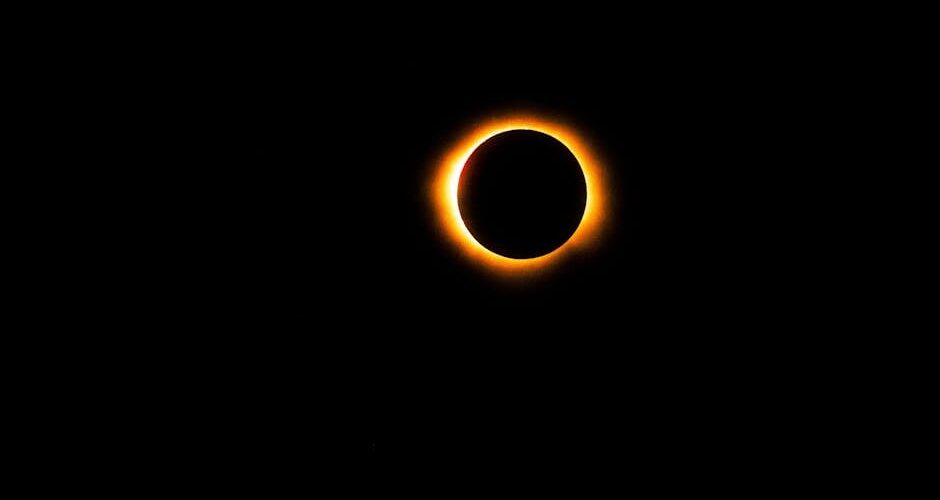
The perfect opportunity arose during the total solar eclipse of May 29, 1919. British astronomer Sir Arthur Eddington led an expedition to observe the eclipse from the island of Príncipe off the west coast of Africa and the town of Sobral in Brazil. Eddington’s measurements of starlight bending around the Sun confirmed Einstein’s predictions, providing the first empirical evidence for general relativity. This event not only solidified Einstein’s theory but also demonstrated the power of astronomical observation to probe fundamental laws of physics, a pursuit that continues to this day.
The Hubble Space Telescope: 1990
Launched in 1990, the Hubble Space Telescope (HST) has provided humanity with some of the most stunning images and profound insights into the universe. Orbiting above Earth’s atmosphere, Hubble’s unobstructed view has allowed astronomers to observe distant galaxies, nebulae, and other cosmic phenomena with unparalleled clarity.
One of Hubble’s most significant contributions is its role in determining the rate of expansion of the universe, known as the Hubble Constant. By observing Cepheid variable stars and distant supernovae, Hubble helped refine our understanding of the scale of the universe and the nature of dark energy. Over its decades of service, the HST has revolutionized our comprehension of the cosmos, inspiring both scientific inquiry and public fascination.
Practical Takeaway: The Ever-Expanding Frontier
These milestones in the history of astronomy are more than just dates and discoveries. They remind us that each generation of astronomers stands on the shoulders of giants, building on the knowledge and tools provided by their predecessors. As we look to the future, the spirit of curiosity and exploration that fueled these breakthroughs continues to drive our quest to understand the universe. Whether through new telescopes, innovative missions, or ingenious theories, the frontier of astronomy is ever-expanding, inviting us to keep looking up and wondering what’s next.