Astrobiology: A Journey from Speculation to Science
The quest to understand life beyond our blue planet has always captured human imagination. While science fiction has long populated space with little green men and fantastical creatures, astrobiology—a field that melds biology, chemistry, and astronomy—has evolved significantly. As of 2026, astrobiology stands on the cusp of a renaissance, fueled by technological advancements, new discoveries, and an unwavering commitment to exploring the unknown.
Mars: The Red Beacon of Life
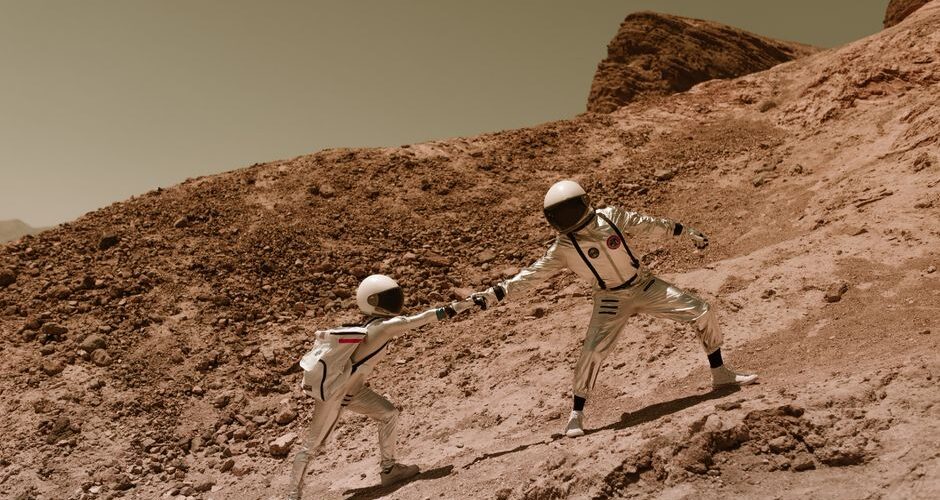
Our fascination with Mars has only intensified over the years. Thanks to missions like NASA’s Perseverance Rover and China’s Zhurong Rover, we have invaluable data about the Martian surface and atmosphere. In 2026, scientists are particularly excited about the discovery of recurring slope lineae (RSL) on the Martian surface, which hint at the presence of liquid water. Coupled with the identification of organic molecules, these findings bolster the hypothesis that microbial life could exist or once existed on Mars.
Moreover, the development of advanced spectrometers and the upcoming Mars Sample Return mission promise to provide unprecedented insights into the Martian soil’s composition. It’s not just about finding life on Mars; it’s about understanding the conditions that could support life, shedding light on Earth’s own biological mysteries in the process.
Europa and Enceladus: Oceans of Possibility
Beyond Mars, the icy moons of Jupiter and Saturn—Europa and Enceladus—are compelling candidates in the search for extraterrestrial life. Beneath their icy crusts lie vast oceans that may harbor life forms in environments akin to Earth’s deep-sea hydrothermal vents.
In 2026, the Europa Clipper mission is slated to make multiple flybys of Europa, equipped with cutting-edge instruments to analyze the moon’s ice shell and subsurface ocean. Meanwhile, the Enceladus Life Finder (ELF) is in the conceptual phase, aiming to study the plumes ejected from Enceladus’s surface. These missions are pivotal as they might discover biochemical signatures—such as amino acids or fatty acids—that are indicative of life.
Exoplanets: Expanding the Habitable Zone
The discovery of exoplanets has revolutionized our understanding of the universe’s vastness. As of 2026, thousands of exoplanets have been cataloged, with many residing in the so-called ‘Goldilocks zone’—not too hot, not too cold, but just right for sustaining liquid water. The James Webb Space Telescope (JWST) is at the forefront, providing high-resolution data on exoplanetary atmospheres, searching for biosignatures like oxygen or methane.
One breakthrough has been the detection of a potential ocean world orbiting the sun-like star, Kepler-452b. Researchers are cautiously optimistic about the planet’s ability to support life, with studies suggesting a rocky surface and a stable climate. This discovery has set the stage for a new era of targeted exploration, where astrobiologists can hone in on the most promising exoplanets.
Technological Innovations: Aiding the Search
In 2026, the renaissance in astrobiology is driven not just by celestial discoveries, but also by technological innovations. Innovations in remote sensing, artificial intelligence, and laboratory technologies are dramatically enhancing our ability to detect and analyze potential biosignatures.
AI algorithms are now being employed to sift through vast datasets from telescopes and rovers, identifying patterns and anomalies faster than ever before. Meanwhile, breakthroughs in lab-on-a-chip technology allow for miniaturized experiments in space, bringing the lab to distant worlds rather than waiting to return samples to Earth.
Public Engagement and the Future of Astrobiology
Astrobiology’s renaissance isn’t confined to labs and telescopic arrays; it’s a movement that has captivated the public’s imagination. Educational initiatives and outreach programs are fostering a new generation of astrobiologists, eager to answer humanity’s oldest question: are we alone?
Virtual reality (VR) experiences now allow individuals to explore distant moons and planets, fostering global interest and investment in astrobiology. Platforms like Citizen Science have democratized the search, involving amateur astronomers and space enthusiasts in the hunt for new worlds and potential biosignatures.
The future of astrobiology looks bright. With each discovery, we’re reminded of the endless possibilities and our responsibility to pursue this knowledge for the benefit of all humankind.
Practical Takeaway: As we advance technologically and broaden our cosmic horizons, the search for extraterrestrial life is increasingly grounded in scientific rigor and international collaboration. Stay informed and consider engaging with citizen science initiatives to contribute to this profound journey.