Unearthing Lunar Secrets
The Moon has fascinated humanity for centuries, but what lies beneath its dusty surface is now capturing scientists’ attention. As of 2026, the Moon is more than a celestial body to gaze upon; it’s a vault of resources that could redefine how we explore space. The renewed interest isn’t just about setting up bases or planting flags—it’s about sustainability and survival in the vastness of space.
The Moon’s Treasure Trove
Many might wonder what exactly the Moon holds that could be so crucial. The answer lies in its unique resources. One of the most exciting discoveries is helium-3, a rare isotope that could revolutionize how we produce energy. Unlike conventional nuclear reactors, fusion using helium-3 promises almost no radioactive waste—an ideal energy source for future space colonies.
Additionally, the Moon’s polar regions are believed to house significant amounts of water ice. This isn’t just vital for human consumption and agriculture; through electrolysis, water can be split into hydrogen and oxygen, providing breathable air and rocket fuel. Imagine lunar bases becoming refueling stations for missions venturing deeper into the solar system!
Technological Innovations Driving Exploration
The push to tap into the Moon’s resources has spurred technological breakthroughs. Lunar rovers are now equipped with advanced drilling tools and AI-driven mapping systems, capable of operating in the harsh, low-gravity environment of the Moon. These rovers are expected to identify and assess resource-rich areas, minimizing human intervention and risk.
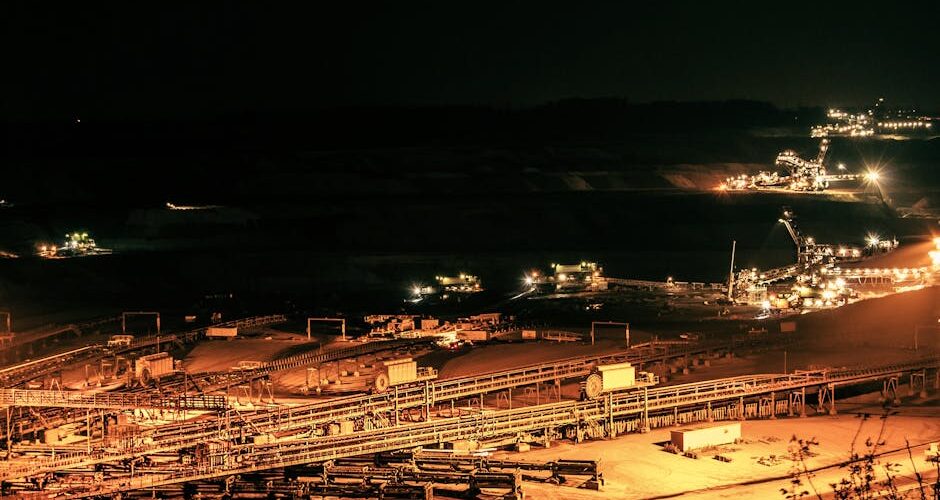
- Autonomous Mining: Automated systems are being developed to efficiently extract and transport lunar materials. With minimal human oversight, these machines could operate continuously, significantly increasing resource yield.
- 3D Printing on the Moon: The ability to print structures using lunar regolith has become a game-changer for construction. As of 2026, prototypes of habitats and tools are being tested, cutting down the need to transport massive amounts of supplies from Earth.
International Collaboration and Lunar Economy
2026 marks a pivotal year for international collaboration on lunar exploration. Countries like the United States, China, and India, along with private entities like SpaceX and Blue Origin, are joining forces. These partnerships aim to pool resources, knowledge, and expertise to effectively and sustainably exploit the Moon’s resources.
Moreover, the concept of a ‘lunar economy’ is gradually taking shape. By establishing mining bases and processing facilities, nations and companies are investing in a future where lunar resources are traded similarly to Earth’s commodities. This could not only lower the cost of space exploration but also create a new economic frontier that benefits all participating nations.
Challenges and Ethical Considerations
Despite the promising prospects, tapping into the Moon’s resources isn’t without challenges. The harsh lunar environment, with its extreme temperatures and radiation, poses significant risks. Continuous research and innovation are essential to develop technologies capable of overcoming these obstacles.
Ethically, the exploitation of lunar resources raises questions about ownership and the potential for conflict. The Outer Space Treaty of 1967, which states that no celestial body is subject to national appropriation, guides current discussions. However, as activities on the Moon increase, revisiting these frameworks might become necessary to ensure fair and peaceful resource distribution.
Practical Takeaway
The Moon’s hidden resources are paving the way for sustainable space exploration. As we harness these natural treasures, the possibilities for establishing a lasting human presence in space become more tangible. For anyone keen on being part of this lunar revolution, now is the time to focus on careers in space technology, astrophysics, and international space policy. The Moon may just hold the key to humanity’s next giant leap.