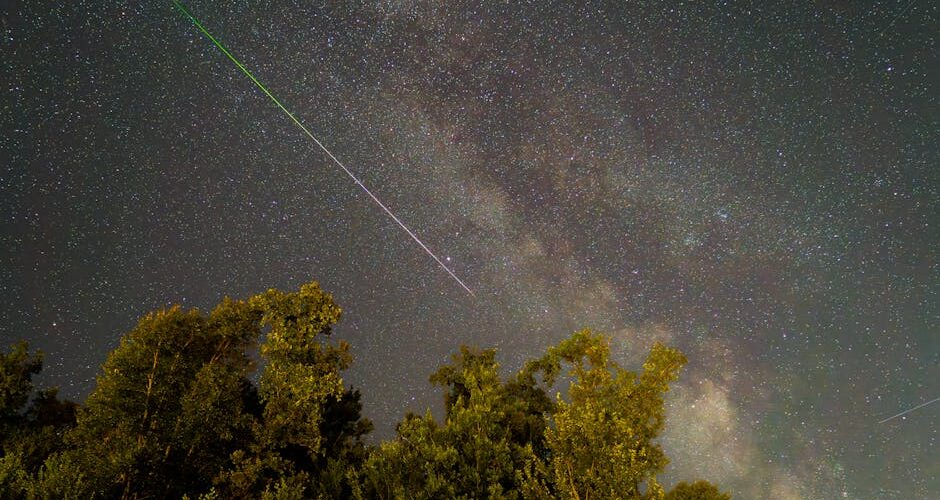
7 Mistakes to Avoid When Watching a Meteor Shower
Meteor showers are one of the most spectacular celestial events one can witness without needing a telescope or any special equipment. Each year, these dazzling displays offer a chance to gaze at the night sky in awe. However, to truly enjoy this cosmic show, it’s important to avoid some common pitfalls. Here’s a guide to help you make the most of your meteor shower experience.
1. Forgetting to Check the Meteor Shower Calendar
The first mistake often made is not checking the timing of the meteor shower. Each shower has a peak period when it’s at its most active. For instance, the Perseids, which are one of the most popular meteor showers, typically peak around August 12th. Missing these peak nights can lead to disappointment, as you may catch only a handful of meteors instead of the expected dazzling display. Websites like the American Meteor Society offer detailed schedules and predictions for meteor showers throughout the year. So, mark your calendar ahead of time!
2. Choosing a Poor Viewing Location
Location, location, location! It’s crucial when it comes to meteor shower viewing. Urban areas with their bright lights can severely hinder your ability to see meteors. Light pollution is a stargazer’s nemesis, washing out the faint meteors. Seek out dark-sky parks or rural areas known for their stargazing potential. For instance, Cherry Springs State Park in Pennsylvania is renowned for its dark skies and is a favored spot among astronomers and enthusiasts alike. Avoid areas with lots of artificial light, and aim for an open field where you can see the entire sky.
3. Not Allowing Time for Your Eyes to Adjust
Our eyes require time to adapt to the dark, a process that can take about 20 to 30 minutes. Many make the mistake of expecting instant results and not giving their eyes time to adjust. In this time, avoid looking at bright screens or any source of light. This means keeping your phone’s brightness low and using red filters on any flashlights you bring. This adaptation is crucial to maximize your ability to spot those faint, fleeting meteors streaking across the sky.
4. Arriving Unprepared for the Weather
While summer meteor showers might suggest warm nights, temperatures can drop significantly once the sun sets, especially in open fields or high altitudes. It’s essential to dress in layers and bring along blankets or sleeping bags. Not preparing for the weather can lead to an uncomfortable experience and cut your viewing session short. For winter showers like the Geminids in December, a thermos of hot drink and a couple of hand warmers can be a savior.
5. Using Telescopes Instead of the Naked Eye
It might seem counterintuitive, but using a telescope can actually be a hindrance instead of a help when watching a meteor shower. These events are best viewed with the naked eye, as meteors can appear anywhere across the sky in a split second. Telescopes have a limited field of view, making it unlikely to catch these fast-moving objects. Instead, lay back on a reclining chair or blanket, let your eyes wander, and enjoy the show.
6. Bringing Too Many Gadgets
While it’s tempting to bring cameras and smartphones to capture the moment, too many gadgets can distract from the experience. Constantly fiddling with camera settings or checking your phone can pull you away from the serene magic of the night. If you must capture the event, consider setting up your camera on a tripod with a long exposure and let it do its work while you enjoy the view. Remember, the experience is ephemeral; sometimes it’s best to just be in the moment.
7. Leaving Before the Show Ends
Patience is key. Meteor showers can be unpredictable, with some nights yielding more frequent meteors than others. It’s tempting to give up after a short while if you’re not seeing much action. However, some meteor showers can surprise you after a lull, suddenly bursting with activity. Plan to stay for at least a couple of hours. If you’re bundled up cozy under the stars, the wait will feel more like a delightful pause than an inconvenience.
Practical Takeaway: Watching a meteor shower can be a profoundly memorable experience if approached with a little preparation and patience. From checking the timing and picking the right location to simply letting your eyes adjust to the dark, these small steps can make a big difference. Remember to dress appropriately, keep your gadgets to a minimum, and give the night sky the time it deserves. Happy meteor shower watching!