The Timeless Art of Celestial Navigation
In a world captivated by digital technology, one might assume that the celestial navigation techniques of ancient mariners have been relegated to mere historical curiosity. However, as space agencies worldwide push the boundaries of exploration, the timeless art of using stars to navigate has found a surprising resurgence. In 2026, celestial navigation is leaping from the ocean to the cosmos, blending ancient wisdom with cutting-edge technology to guide spacecraft through the vast expanse of space.
Bridging the Past and the Future
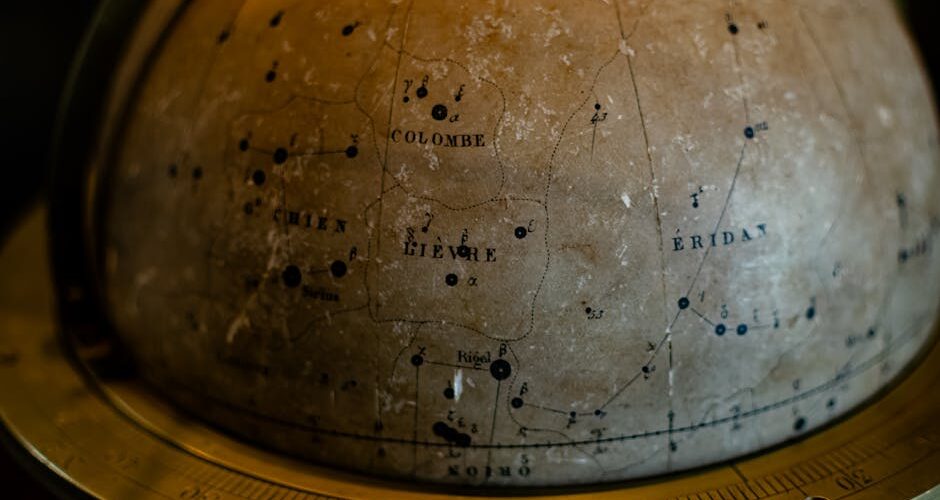
From the Polynesian Wayfinders traversing the Pacific to the navigators of the Royal Navy, humans have relied on the stars for millennia. These ancient techniques are now being adapted in modern space exploration. The European Space Agency (ESA) has spearheaded a project that integrates stellar navigation systems into spacecraft design. By using star trackers capable of pinpointing the craft’s position relative to distant celestial objects, these systems offer a backup to the GPS-like networks currently employed in space.
The innovation lies in merging old and new. Aboard the ESA’s new generation of probes, star patterns are fed into artificial intelligence algorithms. The AI cross-references this data with onboard databases, ensuring precise navigation even in deep space where satellite-based systems can’t reach. This method not only preserves historical techniques but enhances them with modern technology, creating a robust and reliable navigation solution.
The Science Behind Star Tracking
Star trackers function much like a digital camera, capturing images of the sky and identifying star patterns through sophisticated software. This software can determine the spacecraft’s attitude and orientation with remarkable accuracy. For space missions venturing beyond the Moon or Mars, star trackers are invaluable. By observing stars within the craft’s field of view, the system continuously updates positional data, which is critical for correcting trajectories and ensuring successful missions.
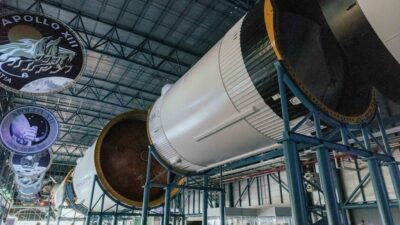
NASA’s Artemis program, eyeing the Moon as a stepping stone for deeper space exploration, has also incorporated enhanced star tracking systems. The Apollo missions relied on manual star sightings, but today’s technology automates this process, reducing the risk of human error and allowing for continuous operation.
Challenges and Innovations
Adapting celestial navigation for space, however, is not without its challenges. Spacecraft must contend with cosmic radiation, which can interfere with sensitive electronic components. To address this, engineers have developed radiation-hardened star trackers that remain functional even in the harshest environments.
Moreover, the dynamic nature of space travel—where spacecraft frequently change speeds and directions—requires constant recalibration of star trackers. Recent advancements in machine learning have enabled these systems to adapt in real-time, minimizing errors and ensuring reliable data transmission.
The Role of Celestial Navigation in Space Economy
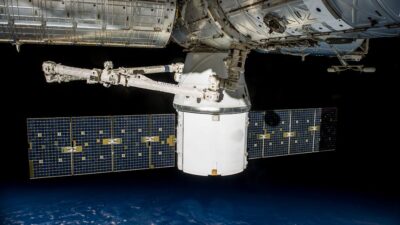
As the space economy expands, efficient navigation becomes ever more crucial. Companies like SpaceX and Blue Origin are looking to celestial navigation as a cost-effective way to ensure the precision and safety of commercial spaceflights. Star trackers, less reliant on ground-based systems, offer a semi-autonomous solution, reducing the need for extensive ground support and thus lowering operational costs.
This resurgence of celestial navigation not only highlights human ingenuity but also underscores the importance of sustainable space travel. By reducing dependency on Earth-based infrastructure, this approach promises cleaner, more autonomous missions, paving the way for a truly interplanetary economy.
Practical Takeaway: The Future of Space Navigation
Celestial navigation may have ancient roots, but its future is bright. As we continue our journey to the stars, the integration of stellar techniques into modern space travel provides a roadmap for innovation and sustainability. By looking to the cosmos, both in wonder and guidance, humanity can navigate the challenges of tomorrow with the wisdom of the past.